
Introduction
*The War Within* introduces a new kind of villain—one not driven by conquest, destruction, or domination, but by revelation. The Inner Corruptor is a void-born entity whose goal isn’t to destroy Azeroth, but to make its people see the truth hidden beneath its crust. Unlike other threats that announce themselves with armies and fire, the Inner Corruptor operates from the shadows—whispering, waiting, warping perception. This antagonist challenges players not only in battle, but in belief. Who controls memory? Who decides what history is buried or preserved? This article explores the design, psychology, motivations, and major appearances of the Inner Corruptor, the philosophical heart of *The War Within*’s void narrative.
Origins and Identity
The Inner Corruptor isn’t a Titan, Old God, or demon—it is something stranger. Described in lore fragments as a “shadow that learned to think,” it appears to have formed during the clash between Void Lords and Titan-forged creations. Some theorize it was born from a Titan memory experiment gone wrong. Others suggest it’s the lingering essence of forgotten gods whose names were erased. What is clear is that the Corruptor doesn’t want Azeroth’s destruction—it seeks to “cleanse” perception. It infects through dreams, emotion, and touch. Unlike Old Gods, it doesn’t consume flesh—it consumes doubt. By the time players face it directly, many NPCs have already fallen to its influence without knowing it.
Presence in the Campaign
The Corruptor first appears as an unnamed voice during delve content in Azj-Kahet, teasing players with contradictions in the lore and revelations that undermine trusted characters. As the story progresses, the entity takes over a Titan relay construct and begins broadcasting falsified memories. In a pivotal moment, the Corruptor causes Anduin to hallucinate an entire battle—forcing players to replay it before discovering it never happened. This unreliable reality theme recurs throughout the mid-campaign. By Act IV, the Inner Corruptor has taken root in the minds of several key NPCs, causing betrayal, confusion, and inner collapse. The final raid reveals its true form hidden inside a crystalline dream chamber.
Boss Encounter: Final Form and Mechanics
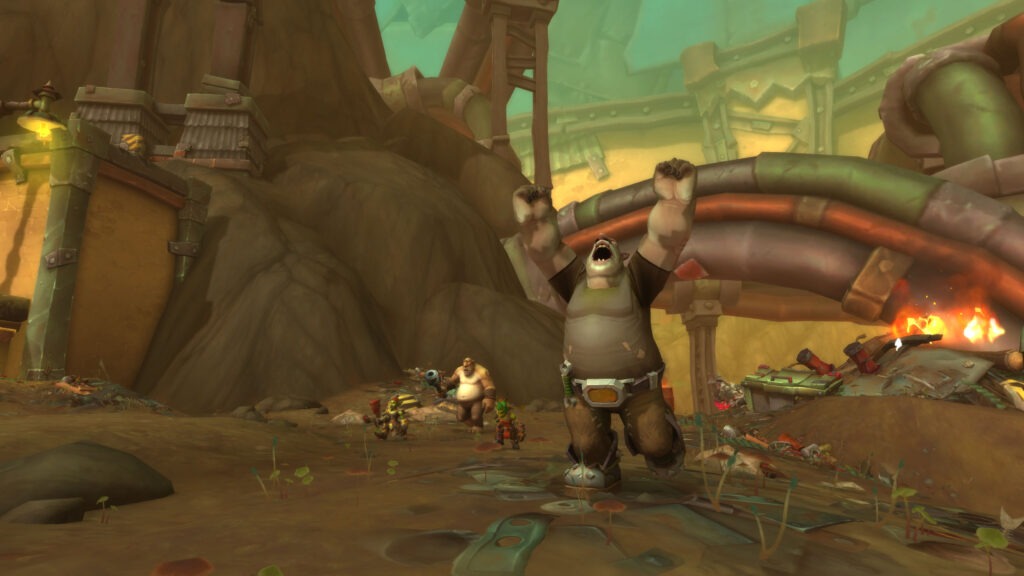
In the final phase of *The War Within*’s launch raid, players confront the Inner Corruptor directly. The fight involves three phases: Memory Fracture, Emotional Collapse, and Identity Disintegration. Players must fight their own reflections, resist rewritten mechanics (such as healing reversing damage), and react to lies whispered mid-fight that create fake boss tells. The visual design features a translucent humanoid shape shifting constantly between familiar NPC forms. The fight is less about physical danger and more about perception—what you believe is real may not be. A “truth meter” replaces the standard energy bar, and managing it becomes crucial to surviving the final phase.
| Phase | Main Mechanic | Visual Cue |
|---|---|---|
| Memory Fracture | Fight replays past events | Flickering battlefield |
| Emotional Collapse | AoE fears tied to player buffs | Swirling void around party |
| Identity Disintegration | Random illusion mechanics | Corruptor takes NPC forms |
Philosophy and Thematic Role
What makes the Inner Corruptor memorable isn’t its power—it’s its philosophy. It challenges players to question their loyalty, perception, and history. Through corrupted vision quests, rewritten memories, and dream logic mechanics, the Corruptor forces us to reckon with the idea that reality is shaped by belief. In its final moments, it doesn’t curse or scream—it simply asks, “Do you truly remember who you are?” This echoes throughout the storylines of Anduin, Selene, and the Nerubian queen, tying the villain to every internal arc in the campaign. The Corruptor isn’t the end—it’s the start of doubt. A void not just in the world, but in understanding.
Conclusion
The Inner Corruptor redefines what a WoW villain can be. It’s not a tyrant or a monster—it’s a question given form. Its presence is quiet but devastating, its methods subtle but effective. Blizzard has crafted a foe that aligns perfectly with *The War Within*’s themes of introspection, memory, and control. As future patches explore what remains of its influence, players will likely continue encountering its echoes in lore books, hidden visions, and possibly other minds. The Corruptor may be defeated—but its whisper will linger. And perhaps that was always the point.

Leave a Reply